

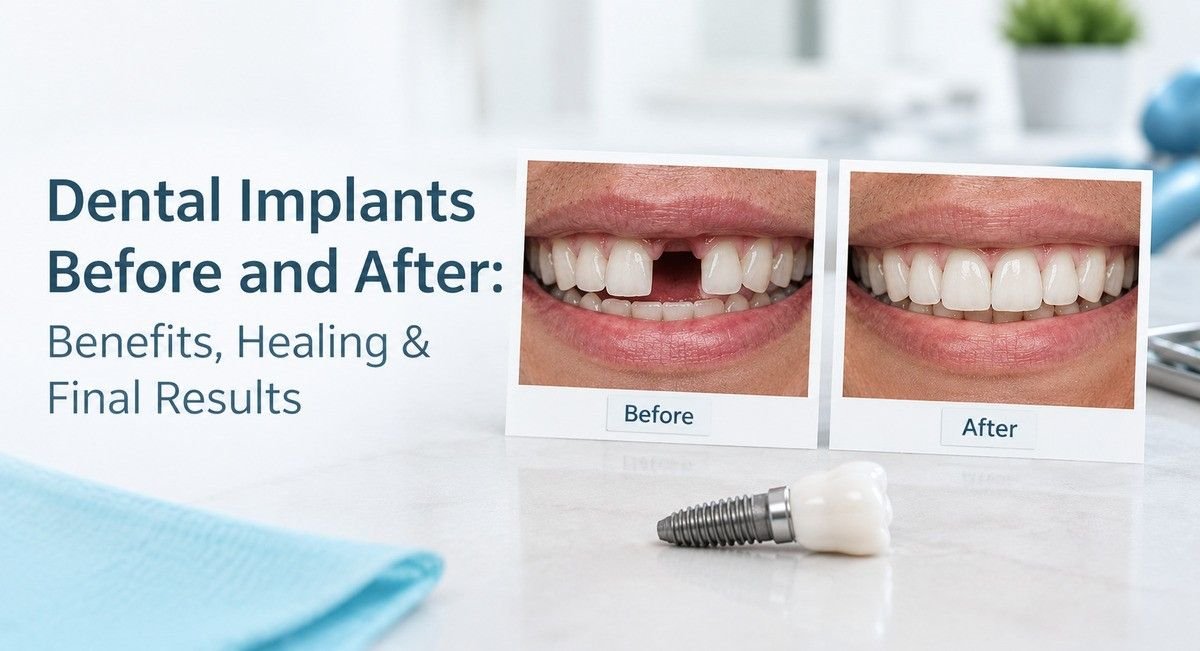
Dental implants are a long-term option for replacing missing teeth. They can restore chewing function, improve the appearance of a smile and help maintain jawbone health. However, the treatment involves several stages, and the final results take time.
Understanding dental implants before and after treatment helps patients know what to expect. The changes are not limited to appearance. Healing, implant stability and the placement of the final crown also affect the outcome.
This guide explains the main benefits of dental implants, the healing process and the factors that influence the final results.
What Do Dental Implants Look Like Before and After?
Before treatment, missing teeth may affect chewing, speech and the appearance of a smile. Tooth loss can also lead to gradual jawbone loss in the affected area.
A dentist assesses the gums, jawbone and surrounding teeth before recommending implants. X-rays or other scans help determine whether there is enough bone to support an implant.
After treatment, the implant supports a crown, bridge or denture, depending on the patient’s needs. A well-designed crown can match the surrounding teeth in shape and colour. However, the final appearance depends on implant placement, gum health and the condition of the remaining teeth.
The dental implant before and after results vary between patients. Some require additional procedures, such as bone grafting, while others can proceed directly to implant placement. Genuine before-and-after photographs can help patients understand possible outcomes, provided the images accurately represent the treatment and follow-up period.
What Are the Benefits of Dental Implants?
The main benefits of dental implants include improved chewing function, stable tooth replacement and support for jawbone health.
Improved Chewing Function
Dental implants provide a stable foundation for replacement teeth. Once healing is complete, patients can generally chew more comfortably than they could with untreated gaps. The timing for returning to normal eating depends on healing and the dentist’s instructions.
Natural-Looking Results
Implant-supported crowns are designed to blend with the surrounding teeth. Their shape and shade are selected to suit the patient’s mouth. The final appearance depends on the position of the implant, the health of the gums and the quality of the restoration.
Support for Jawbone Health
After tooth loss, the jawbone may gradually lose density because it no longer receives stimulation from the tooth root. Dental implants transfer chewing forces to the surrounding bone and can help maintain bone in the treated area. However, they do not prevent all bone loss.
Long-Term Durability
Dental implants can last for many years with proper care. Their longevity depends on oral hygiene, gum health, implant stability and regular dental reviews. The crown may need repair or replacement over time, even when the implant remains stable.
Dental Implant Healing Stages: A Timeline
The dental implant healing process involves recovery of the gums and integration of the implant with the jawbone. The timeline varies depending on bone health, the type of procedure and individual healing.
First 1–2 Weeks: Initial Healing
Swelling, mild bleeding, tenderness and bruising may occur after surgery. These symptoms should gradually improve. Patients should follow their dentist’s instructions on oral hygiene, medication and diet during this period.
Weeks 2–6: Gum Recovery
The gums continue to heal around the implant site. Although the area may feel better, the implant still needs time to integrate with the jawbone. Patients should attend scheduled reviews and avoid putting unnecessary pressure on the surgical site.
Months 2–6: Bone Integration
During this stage, the implant gradually bonds with the surrounding bone through a process called osseointegration. The dentist assesses healing and implant stability before proceeding with the final restoration, where appropriate.
Final Crown Placement
Once the implant is sufficiently stable, the dentist can fit the final crown or other restoration. Some patients may receive temporary teeth or an immediate restoration, depending on their clinical condition.
How Long Does It Take for Dental Implants to Heal?
Dental implant healing time depends on the patient’s bone quality, gum health and treatment complexity. Initial gum healing often takes around one to two weeks, while integration with the jawbone commonly takes several months.
Bone grafting, smoking, certain medical conditions and complications can affect recovery. The dentist will assess healing before confirming when the final restoration can be fitted.
Patients should not assume that reduced pain means the implant has fully healed. Follow-up appointments are important for checking the implant and surrounding tissues.
What Affects Dental Implant Final Results?
The dental implant final results depend on several clinical factors.
- Bone quality: Adequate bone supports implant stability.
- Gum health: Healthy gums help protect the tissues around the implant.
- Oral hygiene: Regular brushing and cleaning between teeth help reduce the risk of inflammation.
- Smoking: Smoking can impair healing and increase the risk of complications.
- Follow-up care: Routine dental reviews help identify problems early.
Final Thoughts
Dental implants replace missing teeth, restore chewing function and provide natural-looking results. However, treatment requires adequate healing time and ongoing care. Understanding the dental implant healing stages helps patients set realistic expectations and prepare for recovery. A dental assessment is the best way to determine suitability, treatment duration and expected results.
If you are considering dental implants, Inverness Dental & Implant Centre can assess your needs and discuss suitable treatment options. Book a dental implant consultation to take the next step towards restoring your smile.
Frequently Asked Questions
Can I have a dental implant immediately after a tooth extraction?
Yes, in suitable cases, an implant can be placed immediately after extraction. This depends on bone quality, gum health, infection and implant stability. Some patients need to wait for the site to heal.
Will I have a gap in my teeth while the implant heals?
Not necessarily. A temporary denture, bridge or provisional tooth may be possible, depending on the implant site and your clinical needs.
Can I get dental implants if I have bone loss?
Possibly. Bone grafting may help rebuild the jawbone where needed. A dentist will assess your bone volume and determine whether grafting is appropriate.
What happens if a dental implant fails to bond with the jawbone?
The implant may become loose and fail to support the replacement tooth. It may need removal, followed by healing and assessment before further treatment.
Are dental implants suitable for people with gum disease?
Active gum disease should be treated before implant placement. Patients with a history of gum disease may still be suitable, but ongoing gum care and regular dental reviews are essential.